Lemosho Route 8 Days: Price & Itinerary (2026)
The Lemosho Route is Kilimanjaro's longest widely-used approach and, by most measures, its best all-around route. It offers superior acclimatization, the most pristine wilderness scenery on the mountain, and noticeably fewer climbers than Machame or Marangu — all while posting some of Kilimanjaro's highest success rates.
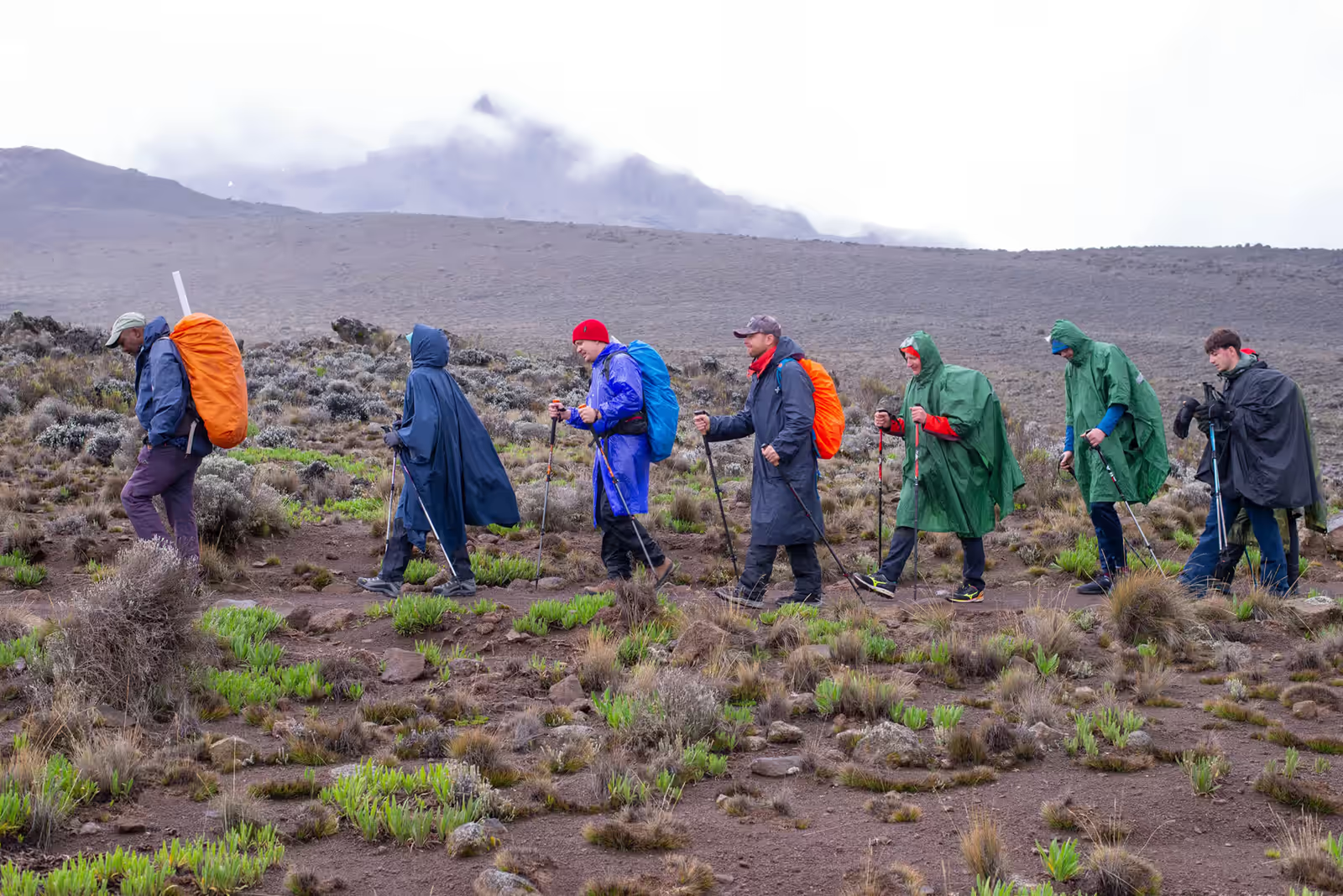
This guide covers the standard 8-day Lemosho itinerary in full, along with a complete 2026 price breakdown. We'll also touch on why some operators stretch the same route over 9 days, and when that extra night is worth paying for.
Route Length: Approx. 70km | Typical Duration: 8 days | Starting Gate: Londorossi Gate (2,100m) | Success Rate: 85-90% (8 days), 92-97% (9 days)
8-Day Lemosho Itinerary Summary
| Days | Elevation | Focus | Experience |
|---|---|---|---|
| Days 1-2 | 2,100m to 3,500m | Forest introduction, gentle acclimatization | Rainforest immersion, 4-6 hours walking daily |
| Day 3 | 3,500m to 3,900m | Alpine plateau, low-gain acclimatization day | Shira Plateau panoramas, minimal elevation stress |
| Days 4-5 | 3,900m to 4,235m | Barranco Wall and high-altitude prep | Technical scramble, first serious altitude effects |
| Days 6-7 | 4,235m to 4,673m | Summit preparation at Barafu Camp | Final approach, rest, mental readiness |
| Day 8 | 4,673m to 5,895m, descent | Summit day | Midnight start, 14-16 hours total, sunrise at Uhuru Peak |
Day-by-Day Altitude Progression
- Day 1: 2,100m (Londorossi Gate) → 2,800m (Mti Mkubwa Camp)
- Day 2: 2,800m → 3,500m (Shira 1 Camp)
- Day 3: 3,500m → 3,900m, sleeping at 3,900m (Shira 2 Camp — acclimatization day)
- Day 4: 3,900m → 3,960m (Barranco Camp — minimal net gain by design)
- Day 5: 3,960m → 4,235m (Karanga Camp, via Barranco Wall)
- Day 6: 4,235m → 4,673m (Barafu Camp)
- Day 7: Rest day at Barafu, short acclimatization walks only
- Day 8: 4,673m → 5,895m (Uhuru Peak) → 1,640m (Mweka Gate)
Some operators route this same trip over 9 days by adding an extra night either in the forest zone early on or a second rest day near Barafu. The additional acclimatization time pushes success rates from roughly 85-90% up to 92-97%, largely by giving the body one more full sleep cycle to adjust before the summit push. If your schedule and budget allow it, the 9-day version is worth the upgrade — but the 8-day itinerary above remains a strong, well-tested option and is what most climbers book.
Difficulty and Success Rates
Lemosho needs no technical skill — there are no ropes, crampons or fixed lines. You need the fitness to walk 5-8 hours a day for a week over uneven ground. The Barranco Wall on day 5 is the only hands-on section: a 200-300 metre scramble lasting about an hour, at your own pace with no equipment (our Barranco Wall guide explains what to expect).
Summit night is the hard part: a midnight start, 12-16 hours of walking in one push, and wind chill down to -15°C. Altitude rather than fitness causes most turnarounds above 4,500m. The slow gains built into this itinerary give the 8-day version an 85-90% success rate, against 65-85% on shorter routes. Ask your doctor about Diamox before you travel (altitude and Diamox details).
Lemosho Route 8-Day Cost Breakdown (2026 Pricing)
Park Entrance Fees: $800-1,000 | Accommodation & Meals: $1,200-1,800 | Guide & Porter Services: $1,500-2,200 | Transportation: $300-400
| Cost Category | 8-Day Lemosho Range | Notes |
|---|---|---|
| Park entrance fees | $800-1,000 | Mandatory government fee, same for all climbers |
| Accommodation & meals | $1,200-1,800 | 7 nights tented camping, all meals, hot water |
| Guide & porter services | $1,500-2,200 | Professional guide, 2-3 porters per climber |
| Transportation | $300-400 | Airport and gate transfers |
| Total per person | $3,800-5,400 | Full package |
For two climbers: roughly $7,600-10,800 combined. For four: $15,200-21,600.
Budget tiers: ultra-budget local operators run $3,500-4,200 per person with minimal amenities; standard reputable operators run $4,000-5,000; premium international-standard operators charge $5,500-7,000+ for exclusive guiding and upgraded camps.
What's typically included: park fees, professional guide services, porters (carrying up to 20kg each), campsite fees, tented accommodation, all meals, hot washing water, and rescue support.
What's not included: international flights, Tanzania visa ($100-150), travel insurance, tips for guides and porters (10-15% of package cost is standard), and personal gear such as boots, sleeping bags, and layers — budget $750-1,550 if buying new, or rent locally in Arusha or Moshi to cut costs.
Accommodation and Camping
Lemosho is a camping route: you sleep in a two-person dome tent at each camp, not a hut as on Marangu. Most operators supply a mess tent, a sleeping tent and a portable toilet tent at the higher camps; lower camps use pit latrines. Hot washing water reaches your tent each morning, and meals come from a camp kitchen carried up by porters.
Porters take up to 20kg of group kit and your duffel, leaving you a 5-8kg daypack of water, layers and snacks. Nights are cold — Barafu sits at 4,673m and can fall below -10°C — so a four-season sleeping bag matters. Check how your operator equips and pays its porters: KPAP-accredited companies cap loads and provide proper boots, food and pay.
Why Choose Lemosho
- Fewest crowds of any major route — a quiet, wilderness feel
- Longest standard approach, giving the most gradual and forgiving acclimatization profile
- Highest documented success rates outside the Northern Circuit
- The most scenic terrain variety on the mountain, from dense rainforest to the vast Shira Plateau
- A gentler introduction than Machame, since the first two days involve lighter daily elevation gain
It suits first-timers who want the highest realistic odds of summiting, photographers drawn to varied landscapes, and anyone who values an uncrowded trail over the fastest or cheapest option. If you're deciding between routes, our Machame Route guide covers the more popular, slightly shorter alternative, and our Kilimanjaro beginner's guide compares all the major options side by side.
Who the 8-Day Lemosho Suits
Book this itinerary if you can spare eight or nine days, want the best realistic chance of summiting, and prefer quiet camps. It suits:
- First-time high-altitude trekkers, thanks to the gentlest acclimatization profile of the popular routes
- Photographers and nature-focused travellers, crossing four climate zones in a week
- Older climbers and conservative pacers, since no day demands a large elevation gain
- Solo travellers and small groups, as camps stay quiet even in peak season
It fits less well on a tight budget — Machame and Marangu cost less — or with only six or seven days. Our first-time climber route guide sets out the trade-offs route by route.
Route Comparison
| Route | Days | Cost | Success Rate | Crowds |
|---|---|---|---|---|
| Lemosho | 8-9 | $3,800-5,400 | 85-97% | Low |
| Machame | 7-8 | $3,500-5,000 | 80-90% | Moderate |
| Marangu | 6-7 | $3,200-4,500 | 65-85% | High |
Best Time to Climb Lemosho
- Dry season (June-October): Best weather and visibility, but the highest prices and most demand for permits
- Green season (November-April): Lower prices, good wildlife viewing lower on the mountain, occasional afternoon rain
- Value sweet spot: Late June, September-October, and November offer the best balance of good weather and manageable pricing
For a full month-by-month breakdown of conditions on the mountain, see our Kilimanjaro weather guide.
Practical Booking Recommendations
- Book at least 3 months in advance to secure preferred dates, especially in peak season
- Choose the 9-day version if your budget and schedule allow — it meaningfully improves success odds
- Start physical training 4-6 months out, focused on cardio and loaded hiking
- Consult a doctor about altitude medication (Diamox) before departure
- Arrange travel insurance that explicitly covers high-altitude evacuation
Conclusion
The Lemosho Route represents outstanding value for climbers who can spare eight or nine days: minimal crowds, superior acclimatization, and some of the best scenery Kilimanjaro has to offer, all at a price that sits comfortably alongside — not far above — the more crowded Machame route.
Ready to book your Lemosho climb? Elem Adventures runs both 8 and 9-day Lemosho itineraries with experienced guides and transparent, all-inclusive pricing.
Frequently Asked Questions
How much does the Lemosho Route cost for 8 days?
An 8-day Lemosho climb typically costs $3,800-5,400 per person, covering park fees, guides, porters, camping, and meals. Budget operators can run as low as $3,500, while premium operators charge $5,500-7,000+.
Is Lemosho 8 or 9 days better?
The 9-day version has a higher success rate (92-97% versus 85-90% for 8 days) because it adds an extra acclimatization night. If your budget and schedule allow the extra day and cost, it's worth it — but 8 days remains a strong, well-proven option.
How does Lemosho compare to Machame?
Lemosho is longer, less crowded, and has a somewhat higher success rate than Machame, but costs slightly more due to the extra days. Machame is more popular and slightly shorter, with excellent scenery but busier trails and camps.
What is included in the Lemosho Route price?
Standard packages include park entrance fees, a professional guide, porter services, tented camping accommodation, all meals, and hot washing water. International flights, visas, travel insurance, tips, and personal gear are not included.
When is the best time to climb the Lemosho Route?
June through October (dry season) offers the best weather and visibility but comes with higher prices and more demand. Late June, September-October, and November offer a strong balance of good conditions and better value.