Climbing Kilimanjaro on a Budget: Complete Cost-Saving Guide
Yes, you can climb Kilimanjaro affordably. While luxury expeditions run $7,000-15,000+ per person, smart planning gets well-prepared climbers to Uhuru Peak for $2,500-4,000 — without compromising on the safety fundamentals that actually determine whether you summit.
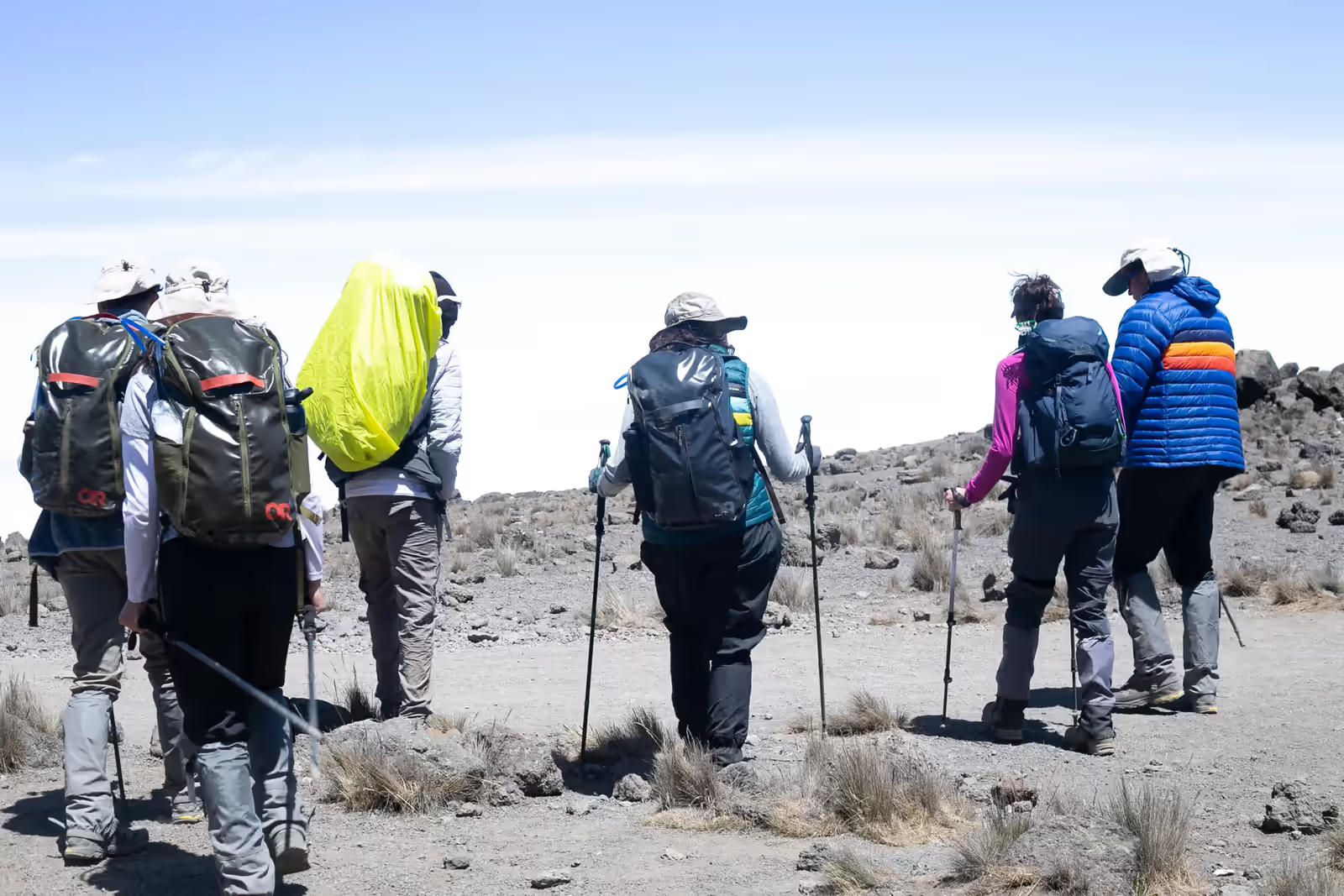
This guide separates genuine, legitimate savings from the corners you should never cut. Budget climbing doesn't mean low quality; it means smart choices about where your money actually matters.
Realistic Budget Range: $2,550-4,100 per person | Non-Negotiable: Park fees, certified guides, proper acclimatization | Biggest Lever: Group tours over private climbs
Understanding Budget vs. Cutting Corners
The single most important mindset shift for budget climbing: your success rate does not need to decline with your spending. The Tanzanian government charges the same park fees regardless of operator, and a well-run local operator with fair-wage guides can deliver the same safety standard as an international luxury company at a fraction of the price. What changes with budget is comfort — tent quality, meal variety, private vs. shared services — not the fundamentals that get you to the summit.
Budget Cost Breakdown
Park Fees (Non-Negotiable): $800-1,000 | Accommodation & Meals: $800-1,500 | Guide & Porter Costs: $700-1,200 | Transportation: $250-400
| Cost Category | Budget Range | Notes |
|---|---|---|
| Park fees | $800-1,000 | Government-mandated, identical across all operators |
| Accommodation & meals | $800-1,500 | Budget camps and simple meals vs. luxury lodges and gourmet food |
| Guide & porter costs | $700-1,200 | Local guides at fair wages vs. premium international guide fees |
| Transportation | $250-400 | Airport and gate transfers |
| Total per person | $2,550-4,100 | Full budget package |
Seven Money-Saving Strategies That Actually Work
1. Choose a Budget-Friendly Route Marangu (established, simplest logistics) and Rongai (lower demand, fewer tourists) tend to run cheaper than Lemosho or the Northern Circuit, which command premium pricing for their length and exclusivity. Potential savings: $200-500. See our full Marangu Route and Rongai Route guides for details.
2. Join a Group Tour Instead of a Private Climb Sharing guide costs, transportation, and porter expenses across a group is the single biggest lever available. Group climbs typically run $2,800-3,500 per person versus $5,000-8,000+ for private tours. Potential savings: $1,500-3,000.
3. Book with Local Operators Tanzania-based companies avoid international marketing markup and maintain direct guide relationships, meaning lower overhead without lower quality. Look for KPAP (Kilimanjaro Porters Assistance Project) certification as a proxy for ethical, well-run operations. Potential savings: $500-1,500.
4. Travel During Low Season March-May (rainy season) and November (shoulder season) see meaningfully lower pricing than the June-October peak, when rates typically carry a 40-60% markup. Potential savings: $300-700. Our Kilimanjaro weather guide breaks down conditions month by month if you want to weigh rain risk against savings.
5. Ask Precisely What's Included Before booking, confirm airport transfer inclusion, exact park fee handling, insurance requirements, and whether water is bottled or treated tap. Vague packages often hide $200-400 in costs that a direct question would have surfaced upfront. Potential savings: $200-400.
6. Choose Route Duration Carefully A 5-day Marangu exists but carries real risk; 6 days is the practical minimum and 7 is optimal. Longer itineraries cost slightly more per trip but the added acclimatization night typically runs only $100-200 while lifting success rates by roughly 20%. Don't cut duration just to save this small amount — it's the worst place to economize.
7. Skip Genuinely Non-Essential Extras Supplemental oxygen ($200-400), professional photography packages, premium tent upgrades, and hot shower add-ons are not necessary for a properly acclimatized climber. Standard guides, standard camping, and a phone camera are entirely sufficient. Potential savings: $300-800.
Hidden Costs Budget Climbers Forget
Even careful planners often underestimate these, so budget an extra $300-500 on top of any quoted package price:
- Tips for guides and porters (10-15% of package cost is standard)
- Altitude medication (Diamox), which requires a doctor's prescription
- Pre-climb malaria prevention if traveling elsewhere in Tanzania
- Travel insurance with high-altitude evacuation coverage
- Personal medications and any last-minute gear replacement
What You Should Never Compromise On
Regardless of budget, these are non-negotiable for safety:
- Experienced, certified guides — ideally KPAP members with a verifiable safety record
- A proper acclimatization schedule — at minimum 6 days, ideally 7+
- Quality meals and adequate daily nutrition (climbers burn 4,000+ calories a day)
- Adequate porter teams so equipment and supplies keep pace with the group
- Working emergency communication systems and confirmed medical evacuation capacity
- Pre-climb health screening and genuinely adequate physical training
If a quoted price seems dramatically below the ranges in this guide, that's a red flag worth investigating before booking, not a deal to jump on.
Example Budget Package
A representative 6-day Marangu budget package breaks down as: park fees $900, hut accommodation $800, meals $450, guide and porters $1,000, and transportation $300 — a total of $3,450 per person. Booking during low season can add a further 20-30% discount, bringing the realistic total closer to $2,400-2,900.
Budget vs. Luxury: What Actually Changes
| Factor | $3,000 Budget Climb | $8,000 Luxury Climb |
|---|---|---|
| Success rate | ~75% | ~85% |
| Group size | 8-12 people | 2-4 people |
| Comfort level | Basic but adequate | Premium throughout |
| Everything provided | Standard gear rental available | Yes, fully outfitted |
The gap in success rate is real but smaller than the price difference suggests — most of that 10-point gap comes from luxury operators defaulting to longer, better-acclimatized itineraries rather than any inherent quality difference in guiding.
Tips for Budget Success
- Train thoroughly for 4-6 months — fitness reduces the need for costly porter support and upgrades
- Hire local guides, typically 30-40% less expensive than international guide services for comparable quality
- Avoid the July-August peak season, where budget options largely disappear
- Book at least 3 months in advance for better negotiating position and group-rate availability
- Verify operator insurance, safety records, and reviews before paying anything
- Set realistic expectations — budget means basic, not bad, and that mindset prevents disappointment
- Tip porters fairly ($5-15 daily) — this is both an ethical baseline and part of what keeps budget operators sustainable
- Stay healthy in the weeks before departure — prevention is far cheaper than a costly medical evacuation
Conclusion
Kilimanjaro is genuinely accessible at every budget level. Smart planning — the right route, group tours, local operators, and off-peak timing — can bring a summit attempt down to $2,500-4,000 without touching the safety fundamentals that determine whether you actually reach Uhuru Peak. The mountain doesn't charge more for success; that comes from preparation, not price tag.
Elem Adventures builds budget-conscious Kilimanjaro packages on Marangu, Rongai, and Machame without cutting corners on guides, acclimatization, or safety — get in touch to plan a climb that fits your budget.
Frequently Asked Questions
What is the cheapest way to climb Kilimanjaro safely?
Book a group tour with a reputable local operator during low season (March-May or November) on a budget-friendly route like Marangu or Rongai. This combination can bring costs down to $2,500-3,500 per person without compromising on guide quality or acclimatization schedule.
How much does the cheapest legitimate Kilimanjaro climb cost?
Realistic budget climbs run $2,550-4,100 per person, covering non-negotiable park fees ($800-1,000), basic accommodation and meals, local guides and porters, and transportation. Prices significantly below this range are a red flag worth investigating.
Does a cheaper Kilimanjaro climb mean a lower success rate?
Not necessarily. Budget climbs on 6-7 day itineraries with certified guides post success rates around 75%, compared to roughly 85% on premium 8-9 day luxury climbs. Most of that gap comes from itinerary length, not guide quality — choosing a slightly longer budget itinerary closes much of the difference.
Should I book a group tour or private climb to save money?
Group tours are the single biggest cost lever on Kilimanjaro. Sharing guide, porter, and transportation costs across a group typically runs $2,800-3,500 per person versus $5,000-8,000+ for a private climb of comparable quality.
What should I never skimp on when climbing Kilimanjaro on a budget?
Never compromise on certified, experienced guides, a proper acclimatization schedule of at least 6-7 days, adequate nutrition, working emergency communication, and travel insurance with high-altitude evacuation coverage. These directly affect safety and summit success.
What hidden costs should budget climbers plan for?
Beyond the quoted package price, budget an extra $300-500 for guide and porter tips (10-15% of package cost), altitude medication like Diamox, travel insurance, and any personal gear you still need to buy or rent.