Marangu Route 6 Days: Price & Hut Trek Details (2026)
The Marangu Route, nicknamed the "Tourist Route," is Kilimanjaro's most straightforward and comfortable climb. It's the only route where you sleep in huts with actual beds rather than tents on the ground — a genuine draw for climbers who want simpler logistics and better rest between long hiking days.
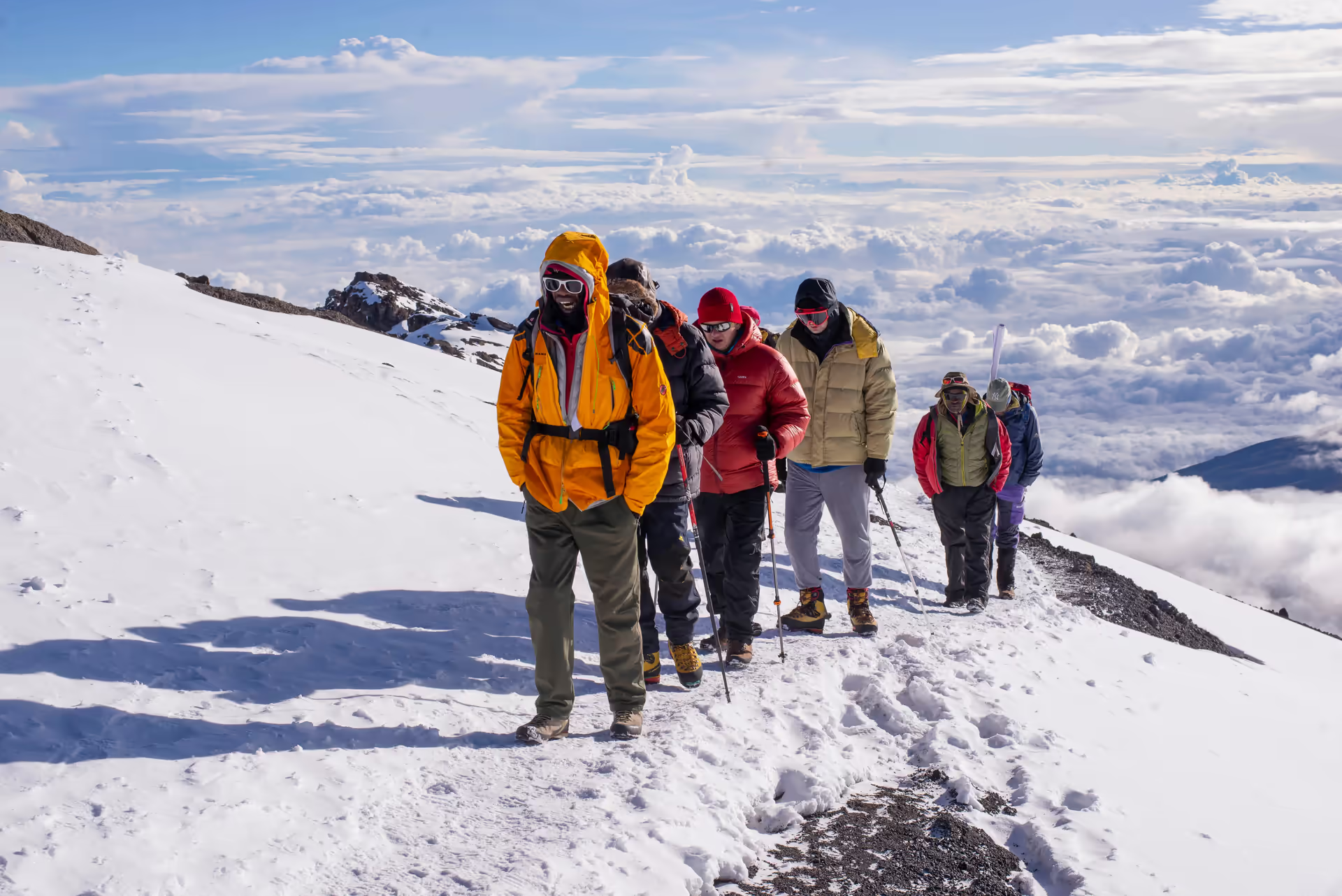
Marangu has welcomed climbers since 1889, making it Kilimanjaro's oldest established route. That long history means proven infrastructure, but also the mountain's busiest trail. This guide covers the full 6-day price breakdown, exactly what the huts are like, and why most experienced guides recommend adding a seventh day.
Route Length: Shortest standard route | Typical Duration: 6-7 days | Accommodation: Huts with beds (only route of its kind) | Success Rate: 65-85%
6-Day Marangu Itinerary
Day 1: Marangu Gate to Mandara Hut (1,879m to 2,716m) Elevation gain: 837m | Hiking time: 4-5 hours | Terrain: Rainforest
An easy introductory day through lush forest. Mandara Hut sits in a forest clearing, and beds with real mattresses feel like a genuine luxury after travel fatigue.
Day 2: Mandara to Horombo Hut (2,716m to 3,704m) Elevation gain: 988m | Hiking time: 4-5 hours | Terrain: Moorland as forest thins
Vegetation thins dramatically and the first real views of Kibo and Mawenzi appear. Mild altitude effects — headache, reduced appetite — start showing up in some climbers here.
Day 3: Acclimatization Rest at Horombo (3,704m) Activity: Light walking (around 30 minutes) or complete rest
The single most important day on a 6-day itinerary. This is when your body produces the additional red blood cells needed for higher altitude — skipping or rushing it is the leading cause of failed summit attempts on this route.
Day 4: Horombo to Kibo Hut (3,704m to 4,703m) Elevation gain: 999m | Hiking time: 4-5 hours | Terrain: Alpine desert, barren landscape
The terrain turns stark and exposed. Kibo Hut, your final camp before the summit push, sits in open alpine desert with Uhuru Peak visible ahead.
Day 5: Summit Day (4,703m to 5,895m, back down to 3,704m) Total elevation: +1,192m ascent, -2,191m descent | Hiking time: 12-15 hours (midnight start)
The hardest day by far. A midnight departure leads to Uhuru Peak by dawn, followed immediately by a long descent back to Horombo the same day — a brutal net change of over 3,300m in a single push.
Day 6: Descent to Marangu Gate (3,704m to 1,879m) Elevation loss: 1,825m | Hiking time: 4-5 hours | Terrain: Rainforest descent
The final walk out, ending with certificates and celebration at the gate.
Hut Accommodations: What to Actually Expect
Mandara & Horombo Huts - Sleeping: Dormitory-style rooms of 2-4 beds, with real mattresses, pillows, and blankets provided - Bathrooms: Pit toilets — basic but functional — and cold water only (no hot showers at this altitude) - Dining: A communal hall serving simple, filling meals (rice, vegetables, meat), with tea and coffee available morning and evening - Atmosphere: Genuinely social — you'll meet climbers from around the world in the shared dining hall, unlike the more isolated tented camps on other routes
Advantages over tented camping: real beds and better sleep quality, shelter from weather, easier logistics, and less gear to carry. Disadvantages: fixed capacity means huts fill up and must be booked well ahead, limited privacy, and shared facilities during peak season crowding.
Kibo Hut (Summit Night) Basic dormitory beds are available, but few climbers actually sleep here — dinner is served early (4-5pm) ahead of a midnight wake-up call. Comfort takes a back seat to the summit push itself.
Marangu Route 6-Day Cost Breakdown (2026 Pricing)
Park Entrance Fees: $800-1,000 | Hut Accommodation & Meals: $1,200-1,600 | Guide & Porter Services: $900-1,300 | Transportation: $250-350
| Cost Category | 6-Day Marangu Range | Notes |
|---|---|---|
| Park entrance fees | $800-1,000 | Non-negotiable government fee |
| Hut accommodation & meals | $1,200-1,600 | 6 nights hut stays, all meals, hot water |
| Guide & porter services | $900-1,300 | Professional guide, porter team |
| Transportation | $250-350 | Arusha-to-gate transfers |
| Total per person | $3,150-4,250 | Full package |
For two climbers: roughly $6,300-8,500 combined. For four: $12,600-17,000.
Budget tiers: ultra-budget local operators run $2,800-3,500 with 65-70% success rates; standard reputable operators run $3,500-4,000 with 75-80% success; premium international-standard operators charge $4,500-5,500+ with 85%+ success rates.
What's included: hut accommodations (nights 1-5), park entrance fee, professional guide, porter team, all meals, hot drinking water, and communal facilities.
What's not included: international flights, Tanzania visa, travel insurance, tips (10-15% recommended), personal gear, occasional airport transfers, and altitude medication.
Why 7 Days Beats 6 on Marangu
Marangu is the one route where the standard itinerary is genuinely on the edge of too short. The data is stark:
| Duration | Acclimatization Days | Success Rate |
|---|---|---|
| 5-day | 0 | 40-50% |
| 6-day | 1 | 65-75% |
| 7-day | 2 | 80-90% |
A single extra night at Horombo — typically costing around $400-500 more — adds a second full acclimatization cycle and lifts success rates by roughly 15-20 percentage points. Nearly every experienced guide will recommend the 7-day version over the 6-day for exactly this reason; the 6-day option exists mainly for climbers with hard time constraints who accept the tradeoff.
Who Should Choose Marangu
- First-time climbers who want the most proven, established route on the mountain
- Comfort-focused climbers who prefer real beds to sleeping bags on the ground
- Budget-conscious travelers, since Marangu is typically the least expensive standard route
- Travelers with moderate time constraints, since it's the shortest route to the summit
Who Should Look Elsewhere
- Climbers seeking solitude — Marangu is the busiest route on the mountain, since it's used for both ascent and descent
- Photography enthusiasts wanting dramatic, varied scenery — routes like Machame and Lemosho offer more visual variety
- Experienced trekkers wanting a genuine challenge or off-track feel — see our Rongai Route guide for a quieter alternative
Marangu vs Other Routes
| Aspect | Marangu | Machame | Lemosho |
|---|---|---|---|
| Comfort | Highest (beds) | Medium | Lowest |
| Acclimatization | Adequate (7-day) | Good | Best |
| Success rate (7-day) | 80-90% | 90% | 95% |
| Crowds | Busiest | Moderate | Fewest |
| Cost | $3,150-4,900 | $3,300-4,700 | $3,800-5,400 |
Best Time to Climb Marangu
Dry season (June-October): best weather and the most established route conditions. Shoulder months (November, May): good value. Green season (January-April): lowest prices, but wetter afternoons.
Practical Booking Tips
- Book 2-3 months ahead for flexible dates, or 4-6 months ahead for peak season (July-August)
- Choose the 7-day option if at all possible — the acclimatization gain is worth the modest extra cost
- Train 4-6 months in advance, focusing on cardiovascular fitness and leg strength for the descents
- Hut space is limited and genuinely fills up — this is not a route where last-minute booking works reliably
Conclusion
Marangu offers Kilimanjaro's most comfortable and budget-friendly path to the summit, with real beds, established infrastructure, and the shortest standard itinerary on the mountain. It trades some scenery and solitude for that comfort and price — but for first-timers prioritizing achievability over drama, it remains a genuinely solid choice, especially at 7 days rather than 6.
Elem Adventures runs both 6 and 7-day Marangu itineraries — talk to us about which timeline fits your travel plans and summit goals.
Frequently Asked Questions
How much does the Marangu Route cost for 6 days?
A 6-day Marangu climb typically costs $3,150-4,250 per person, covering park fees, hut accommodation, guides, porters, and meals. It's generally the least expensive of Kilimanjaro's standard routes.
What are the huts like on the Marangu Route?
Mandara and Horombo Huts offer dormitory-style rooms with real beds, mattresses, and blankets, plus a communal dining hall. Bathrooms are basic pit toilets with cold water only. Kibo Hut, used only on summit night, is more minimal since most climbers barely sleep there before the midnight departure.
Should I do 6 or 7 days on the Marangu Route?
Seven days is strongly recommended. A 6-day itinerary has only one acclimatization day and a success rate of 65-75%, while adding a single extra night at Horombo raises success to 80-90% for roughly $400-500 more.
Is Marangu a good route for beginners?
Yes, particularly for climbers who value comfort and simpler logistics. Its hut-based accommodation and established infrastructure make it the most approachable route, though its success rate lags behind Machame and Lemosho unless you choose the 7-day version.
Is the Marangu Route crowded?
Yes, it's the busiest route on Kilimanjaro, since it's used for both ascent and descent by all climbers on the route. If solitude matters to you, consider the Lemosho or Rongai routes instead.