Rongai Route: Off-the-Beaten-Path Kilimanjaro Adventure
Most Kilimanjaro climbers never see the mountain's northern side. The Rongai Route approaches from that direction, starting near the Kenyan border rather than the busier southern gates — and it remains, by a wide margin, the least crowded way up the mountain.
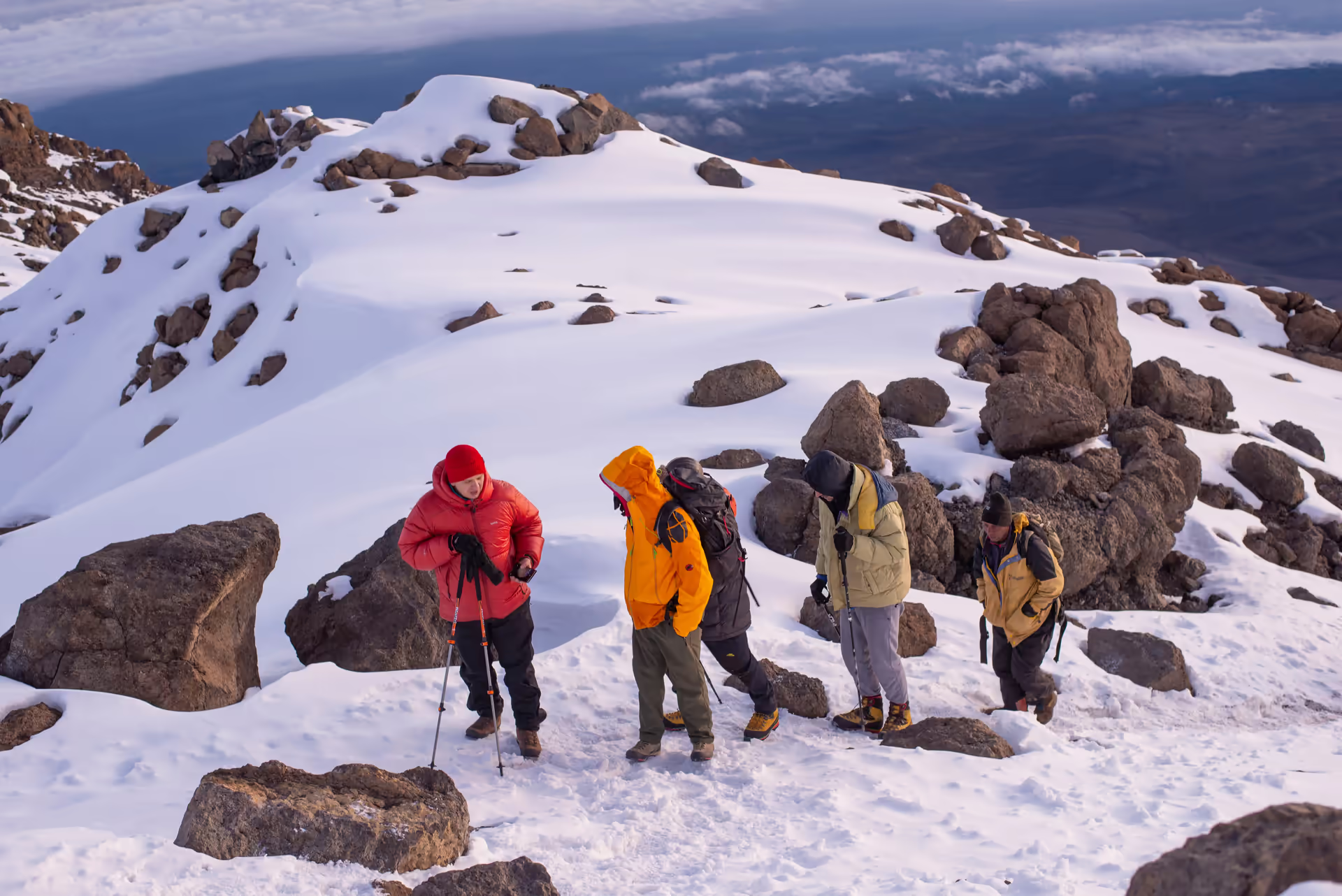
Originally a trade route used by local communities long before it became a trekking path, Rongai offers an alternative for climbers who want the summit experience without sharing every camp with 100+ other trekkers. This guide covers the itinerary, what sets the route apart, and how to maximise your success on it.
Route Length: Northern approach, gentler gradient | Typical Duration: 6-7 days | Starting Gate: Rongai/Nalemuru Gate (2,020m) | Success Rate: 80-85%
Why Choose Rongai
Unique advantages: - The fewest crowds of any standard Kilimanjaro route - Gentler gradients than Machame, making for a physically easier climb - Real wildlife encounters — buffalo and elephant sightings are possible on the lower slopes - Distinctive views of Mawenzi peak throughout the middle days - Minimal tourist infrastructure and an unhurried pace at camp
Route Description and Difficulty
The trail runs roughly 65 kilometres from Nalemuru Gate to Uhuru Peak, gaining about 3,900 metres. There is no Barranco Wall equivalent and no scrambling; the steepest sustained section is the scree slope above Kibo Hut on summit night.
Day walking is moderate — four to six hours on most days. The difficulty comes from altitude rather than terrain: sleeping heights rise steadily, and the itinerary builds in a full acclimatisation day at Mawenzi Tarn (4,330m), which is why a well-paced 7-day Rongai trip posts success rates close to routes running two days longer.
The 7-Day Rongai Itinerary
Day 1: Rongai Gate to Simba Camp Altitude: 2,020m to 2,640m | Duration: 3-4 hours | Terrain: Pine and cypress forest
A gentle start through pristine forest, with a fraction of the trekkers you'd encounter on the southern routes on the same day.
Day 2: Simba Camp to Kikelewa Camp Altitude: 2,640m to 3,600m | Duration: 4-5 hours | Terrain: Forest to moorland transition
A gradual climb with steadily improving views as the forest opens into moorland.
Day 3: Kikelewa to School Hut Altitude: 3,600m to 3,900m | Duration: 3-4 hours | Terrain: Alpine moorland
A deliberately short day, built for acclimatisation rather than distance covered.
Day 4: School Hut to Mawenzi Tarn Altitude: 3,900m to 4,330m | Duration: 4-5 hours | Terrain: Moorland and scree
Some of the route's best scenery, with Mawenzi's dramatic rock formations dominating the skyline.
Day 5: Acclimatisation Day Altitude: 4,330m | Duration: Short exploration hikes
A critical rest day before the final approach — short walks around Mawenzi Tarn help the body adjust without the strain of a full trekking day.
Day 6: Mawenzi Tarn to Kibo Hut Altitude: 4,330m to 4,700m | Duration: 2-3 hours
A short final push to base camp, leaving energy in reserve for the summit push that night.
Day 7: Kibo Hut to Uhuru Peak, then down to Horombo Hut Altitude: 4,700m to 5,895m, descending to 3,720m | Duration: 15-17 hours
The longest day by far — a midnight summit push followed by a rapid, long descent all the way to Horombo Hut the same day. Expect 15-17 hours on your feet; the summit night guide covers pacing, temperature and kit in detail.
Camping and Accommodation on the Rongai Route
Rongai is a camping route. Unlike Marangu, there are no huts, so you sleep in a two-person tent pitched by your crew at each camp.
- Simba Camp (2,640m): sheltered forest clearing — the warmest night of the climb
- Kikelewa Camp (3,600m): open moorland with little protection from wind
- Mawenzi Tarn (4,330m): pitches beside a small tarn under Mawenzi's spires, and the coldest night
- Kibo Hut (4,700m): basic stone shelters and tents on bare volcanic scree
Facilities stay simple: long-drop latrines, no showers and a wash bowl filled by your crew each evening. Water comes from streams your team collects, filters or boils. Reliable sources are sparse on this side of the mountain, so camps sit where water does.
Rongai Route Characteristics
Water availability: The "Second Water" point on Day 3 is a critical stop — sources are more limited on this route than on Machame or Lemosho, so plan hydration carefully and bring adequate carrying capacity.
Weather: The northern approach receives noticeably less moisture than the southern routes, meaning generally drier conditions but potentially colder temperatures at altitude. Sunrise views tend to be exceptional given the clearer air.
Wildlife: More visible wildlife than on any other standard route — buffalo and elephant sightings occur on the lower slopes, and birdwatching opportunities are excellent throughout the forest zone.
Best Season for the Rongai Route
The core dry season runs June to October, when trails are firm and camps are dry. Rongai at its busiest still means a few groups rather than dozens, and nights at Kibo Hut drop well below freezing.
January and February form a second window with warmer days and clearer views of Kibo. The long rains from March to May fall hardest on the southern slopes; Rongai's northern position receives noticeably less of them, which is why operators recommend the route if your only free dates sit in April or May. For a month-by-month breakdown, see the best time to climb Kilimanjaro guide.
Who the Rongai Route Suits
Rongai suits you if:
- You want the quietest trail on the mountain — camps here rarely hold more than a couple of groups
- You are a photographer chasing angles and light that most climbers never get
- You have moderate fitness and would rather walk steady gradients than tackle technical sections
- You are arriving via Nairobi or pairing the climb with a northern safari, since the gate sits close to the Kenyan border
Think twice if your priority is changing scenery every day, or if you want hut accommodation — only Marangu offers huts, and Lemosho or the Northern Circuit cover more varied ground.
What to Expect
- Wilderness factor (9/10): minimal tourist infrastructure and close contact with your mountain crew create a quiet, well-run camp atmosphere
- Scenery quality (8/10): Mawenzi peak becomes the visual centrepiece, and the far lower crowd density means uninterrupted photography
- Difficulty (7/10): gentler gradients than Machame make this one of the more physically manageable routes, though the elevation gain is comparable to other paths
Success Strategies for Rongai
- Book 7-8 days rather than the bare minimum 6 — the extra acclimatisation time adds roughly 20% to success probability
- Choose guides with specific Rongai experience — local knowledge of water sources and pacing matters more here than on well-trodden routes
- Manage altitude proactively — read the altitude sickness and Diamox guide before you travel, and pick an operator that checks oxygen saturation at camp each day
- Plan water intake carefully and bring a reliable purification method, given the more limited natural sources
- Know what the numbers mean — our Kilimanjaro success rates analysis shows how itinerary length and operator practice affect your odds
- Support your guides and porters fairly — smaller operator teams on this route depend more directly on tips and fair wages
Rongai Route Cost
Budget for Rongai typically mirrors the mid-range among Kilimanjaro routes:
Park Fees: US$800-1,000 | Accommodation & Meals: US$1,500-2,200 | Guides & Porters: US$1,000-1,500
That totals roughly US$3,300-4,700 per person for a standard package, similar to Machame and generally less than Lemosho or the Northern Circuit. Park fees are set by the park authority and are identical on every route, so the real difference between operators sits in crew wages, equipment and group size. If you're weighing routes primarily on cost, our budget Kilimanjaro guide breaks down where Rongai fits among the cheaper options.
Rongai vs Other Routes
Rongai sits in an interesting middle ground: gentler and quieter than Machame, but less scenic variety than Lemosho. It shares its starting gate and early itinerary with the Northern Circuit, which is essentially an extended version of the same northern approach for climbers wanting even more acclimatisation time and an even quieter trail.
Conclusion
The Rongai Route offers something different on a mountain where most routes funnel climbers through the same handful of camps. Gentler terrain, real wildlife encounters, and a fraction of the crowds make it a strong choice for anyone who values an unhurried wilderness experience as much as the summit itself.
Discover Rongai's quieter side of Kilimanjaro with Elem Adventures as your guide.
Frequently Asked Questions
Is the Rongai Route good for beginners?
Yes. Rongai has gentler gradients than Machame, making it one of the more physically manageable routes, while still offering full acclimatization on a 7-8 day itinerary. It requires no technical climbing skill.
Why is the Rongai Route less crowded than other Kilimanjaro routes?
Rongai approaches from the mountain's northern side near the Kenyan border, away from the more accessible southern gates used by Machame, Marangu, and Lemosho. Its more remote starting point and less-marketed profile keep climber numbers low.
How much does the Rongai Route cost?
A standard Rongai package typically costs $3,300-4,700 per person, covering park fees, accommodation, meals, guides, and porters — similar to Machame and generally less than Lemosho or the Northern Circuit.
What is the success rate on the Rongai Route?
Roughly 80-85% on a well-paced 7-day itinerary, rising further on 8-day versions. Success depends heavily on acclimatization pace and guide experience with the route's specific water sources and terrain.
Will I see wildlife on the Rongai Route?
Rongai offers more wildlife visibility than most other Kilimanjaro routes. Buffalo and elephant sightings occur on the lower forested slopes, and the route is considered one of the better options for birdwatching.